
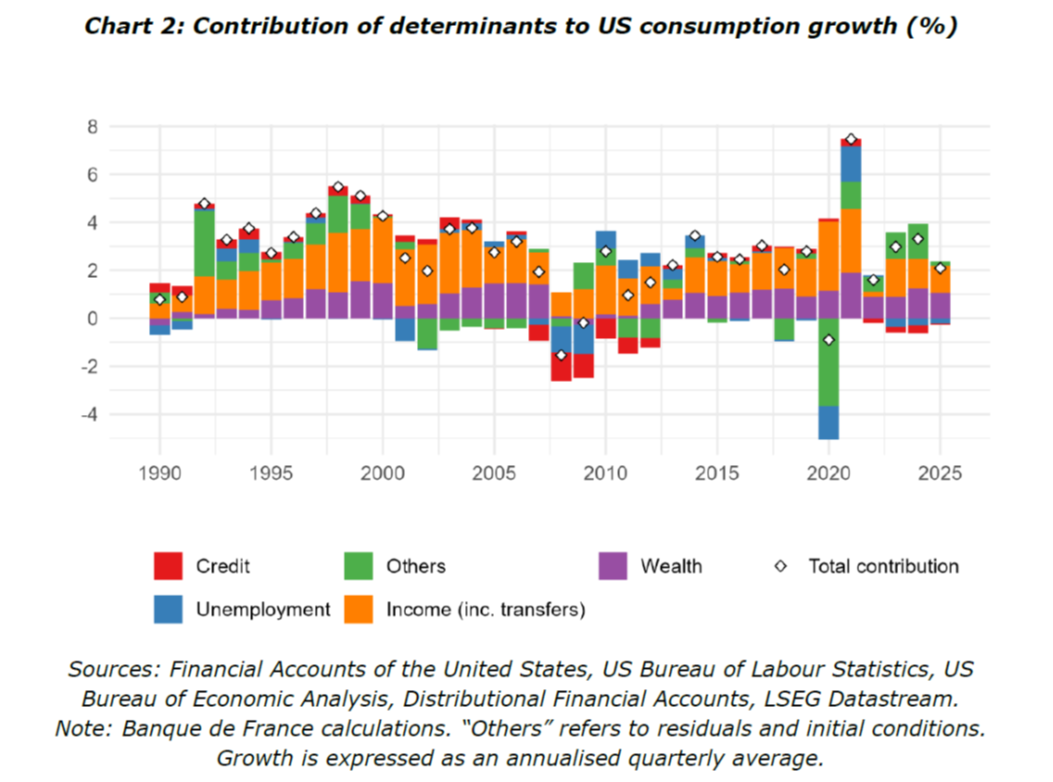
Recent economic modeling suggests that the current trajectory of global consumer spending is increasingly tethered to the performance of the stock market rather than traditional wage growth. In a shift that underscores the growing importance of the “wealth effect,” data from 2025 indicates that approximately half of observed consumption is now directly influenced by fluctuations in equity wealth. This correlation suggests that standard income metrics may no longer provide a complete picture of aggregate economic health.
The research, which draws on disaggregated data across various income groups, highlights a significant divergence in how different demographics experience the current economy. While equity-rich households drive the top-line consumption figures that bolster GDP, many businesses are forced to navigate a more complex environment defined by UK inflation and rising operational costs. This creates a bifurcated marketplace where luxury sectors may thrive even as the broader population faces stagnant purchasing power.
Relying on market performance to sustain consumption introduces a level of systemic volatility that policymakers are beginning to view with caution. If equity markets face a significant correction, the resulting “reverse wealth effect” could lead to a rapid and uncontrolled cooling of consumer demand. This risk is amplified in an environment where household finances are already stretched, leaving those without substantial investment portfolios particularly vulnerable to shifts in the wider economy.
For the UK professional landscape, this trend suggests that the health of the financial sector is more deeply intertwined with the high street than previously assumed. Analysts now argue that to accurately predict future consumption patterns, one must look beyond the labor market and closely monitor the concentration and distribution of equity ownership. The traditional link between employment and spending is being superseded by the link between portfolio performance and consumer confidence.
Ultimately, an economy fueled by asset appreciation rather than broad-based wage growth raises fundamental questions about long-term social stability. If the engine of growth is powered primarily by the top half of the wealth distribution, the overall resilience of the UK economy remains fragile. Moving forward, the challenge for regulators will be balancing the benefits of a booming market with the necessity of a sustainable, inclusive economic recovery.