Bank of England Interest Rates dictate the rhythm of the United Kingdom’s economic life, serving as the primary lever by which Threadneedle Street modulates inflation and steers the national ledger. For the professional community, these periodic decisions represent far more than mere adjustments to borrowing costs; they function as a fundamental recalibration of capital allocation, debt servicing strategies, and long-term investment viability. When the Monetary Policy Committee (MPC) gathers in London, the ensuing policy shift reverberates through every sector, from high-growth technology startups relying on venture debt to established manufacturing firms managing complex supply chain credit lines.
Understanding the Structural Logic of Monetary Policy
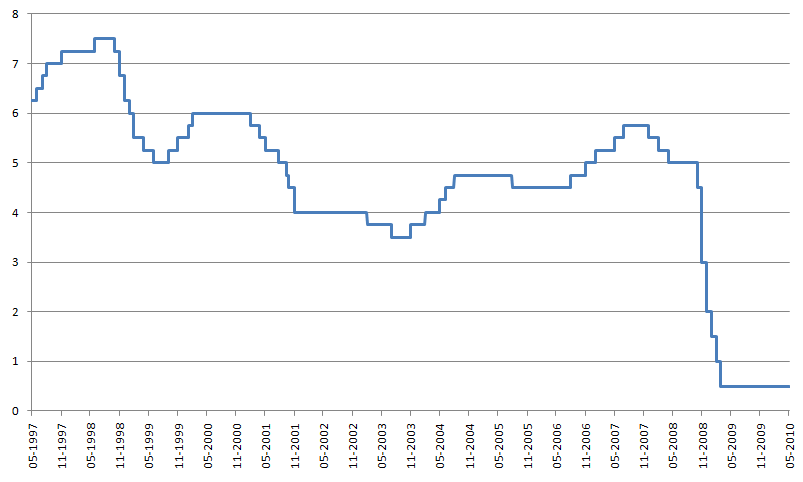
The institutional framework governing borrowing costs is designed to balance the precarious scales of price stability against the imperatives of sustainable economic output. When officials decide to maintain higher levels, they are essentially signalling a prolonged period of fiscal discipline, forcing firms to scrutinise their internal balance sheets with heightened rigour. This environment prioritises companies that exhibit strong cash flow generation and low leverage, effectively penalising those that became overly reliant on the era of cheap liquidity. Business leaders must recognise that these mechanisms are not arbitrary; they are the result of rigorous econometric modelling that accounts for everything from wage growth pressures to the fluctuating energy demands of our industrial landscape.
Professional discourse often simplifies these shifts into binary outcomes, yet the reality involves a complex interplay between market expectations and central bank transparency. As the economy navigates this tightening cycle, observers should look to the Bank of England official communications for nuance regarding the neutral rate. The structural logic here suggests that we have transitioned away from an era of perpetual stimulus into a more traditional regime where risk-adjusted returns must account for the actual cost of money. For the CFO or the corporate treasurer, this means that every project appraisal must now incorporate a hurdle rate that accurately reflects the prevailing climate, rather than assuming a return to historical lows that have distorted valuations for over a decade.
Strategic Implications for Corporate Borrowing
Navigating the current economic landscape requires a departure from legacy financial strategies that assumed borrowing would remain inexpensive indefinitely. Organisations are now forced to re-evaluate their debt maturity profiles, often prioritising the extension of fixed-rate windows to hedge against further volatility in market rates. This shift is not merely about risk mitigation; it represents a tactical change in how capital is deployed across the enterprise. When credit becomes expensive, marginal projects are abandoned, and management teams focus on operational efficiency and the optimisation of existing assets. This disciplined approach is arguably healthier for the long-term robustness of British industry, as it discourages the zombie firm phenomenon where unproductive companies are artificially sustained by low costs.
Furthermore, the current environment necessitates a sophisticated dialogue with financial institutions. It is no longer sufficient to simply renew credit facilities on autopilot; businesses must now demonstrate resilience, clear growth trajectories, and a conservative approach to leverage to secure favourable terms. Those who fail to articulate a compelling narrative about their margin protection in the face of rising costs will find their financing costs escalating rapidly. It is the seasoned leader’s responsibility to ensure that treasury departments are fully aligned with the broader strategic objectives of the firm, ensuring that interest rate exposure is not just managed but actively factored into every significant commercial decision from procurement to dividend policy.
Market Volatility and Future Projections
Market observers frequently debate whether the current trajectory of monetary policy will lead to a soft landing or a more pronounced contraction in private sector activity. While the consensus among analysts suggests that the peak may be behind us, the long and variable lags inherent in monetary policy mean that the full impact of previous hikes is still filtering through the real economy. Businesses should prepare for a landscape characterised by persistent, if not volatile, conditions where the primary challenge is to maintain growth while preserving margins against the dual headwinds of higher service charges and wage inflation. This requires a level of agility that many traditional firms may find challenging to implement, yet it remains the baseline for survival in the current climate.
Looking ahead, the evolution of these policies will be heavily influenced by data points such as labour market tightness and services inflation, which remain the stickier components of the consumer price index. Professionals who monitor these indicators closely are better positioned to anticipate pivots before they become codified in official policy statements. By ignoring the broader macroeconomic context and focusing solely on immediate operational hurdles, management teams leave themselves vulnerable to sudden shifts in the regulatory environment. True professional leadership involves synthesising these macroeconomic inputs into a cohesive business strategy that remains resilient regardless of how frequently or aggressively the central bank chooses to act. The objective is not to predict the next move with perfect certainty, but to build an organisation that is sufficiently flexible to endure whatever volatility the financial markets choose to deliver in the coming fiscal year.